Lissajous Studio
Toys that explore the interplay of visuals, audio, and math.
Work in progress
All start silent — audio begins on your first click.
Where the name comes from
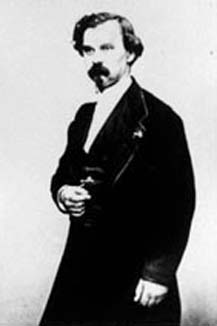
Lissajous was a French physicist who found a way to look at sound. He fixed a small mirror to a vibrating tuning fork, bounced a beam of light off it, then off a second mirror on a fork turned at right angles. The spot traced a standing figure — one oscillation plotted against another.
What the figure looks like depends on nothing but the ratio between the two frequencies. The curve shown here is 3:2, the two forks a perfect fifth apart. Whole-number ratios close into a stable shape and hold it; anything else never closes at all, and the trace wanders until it has filled the box.
That is the fact both pieces here are built on. The polyrhythm field realigns because its revolution counts are whole numbers. The Risset rhythm coheres because its layers sit exactly an octave of tempo apart. His apparatus is the direct ancestor of the harmonograph, and of everything since that draws what it sounds like.